


Fungal diseases are one of the most common in infectious medical practice.The disease is caused by fungi, which easily pass from one person to another if basic rules of personal hygiene are not observed.To protect yourself and your loved ones, never use someone else's shoes.Often, infection occurs when visiting a swimming pool, gym, or sauna, where ideal conditions exist for the development of a fungal infection - moisture, elevated temperature.What do you need to know about a common disease in order to avoid it or be cured at an early stage?
How to treat toenail fungus with pharmaceutical products
Medical statistics claim that people turn to doctors for fungal diseases when the problem occurs on the feet, including the nails.It is very important when treatment is started.The initial stage of the disease is easier to treat.Getting rid of old fungus is a long and often painful ordeal.It is important to complete the treatment until all signs of the disease disappear, otherwise the remaining lesion may give rise to a new round of nail disease.
To treat mycosis (fungus) of the feet and nails, local remedies are used in the form of gels, sprays, ointments, varnishes and tablets.The main task of antifungal drugs is to destroy fungal spores, relieve inflammation, restore normal blood circulation, and prevent relapses.The large number of drugs offered against fungal diseases sometimes confuses the patient.
Never self-diagnose.If you have doubts and suspicions about your feet being infected with a fungus, if your big toe nail (and it is one of the first to suffer) has changed color - it has become grayish, yellow, thickened, and started to peel off - you urgently need to visit a dermatologist.After examination and laboratory tests, the doctor will prescribe appropriate treatment.To find out effective ways to combat fungus and understand the essence of treatment methods, we recommend that you read the information.
Varnish
If the nail fungus is not advanced, but is at an early stage, it is worth trying to use varnishes that help soften the affected area.In this case, the fungal spores die under the influence of the drug.Following the instructions, the varnish is applied twice a week for several months until the healthy nail grows completely.
To treat a nail, you should choose one type of drug.It is not recommended to alternate or change varnishes; such manipulations will lead to a decrease in the effectiveness of the therapeutic effect.Before starting use, be sure to read the contraindications.Pregnant women, children and people suffering from individual intolerance are prohibited from using antifungal varnishes.
Before applying the varnish, you should remove as much as possible the area affected by the fungus using a special file that comes with the medicine.After degreasing the nail with a water-alcohol solution, apply a layer of varnish, which should be changed every few days.Before the procedure, you can take a soap and soda foot bath.The varnish is removed in the same way as decorative varnish, using organic solvents.
Drugs

For advanced forms of fungal infection of the feet and nails, it is worth considering the option of mixed treatment, where you need to take pills in combination with creams, varnishes and sprays.Systemic antibiotics have a strong detrimental effect on bacteria, accelerating the treatment process.Correct identification of the causative agent of the disease will help you get rid of mycosis faster.
Self-administration of the tablets is prohibited; they have a number of contraindications for use, so taking the medication should be supervised by an experienced doctor.
Products for removing affected nail plates
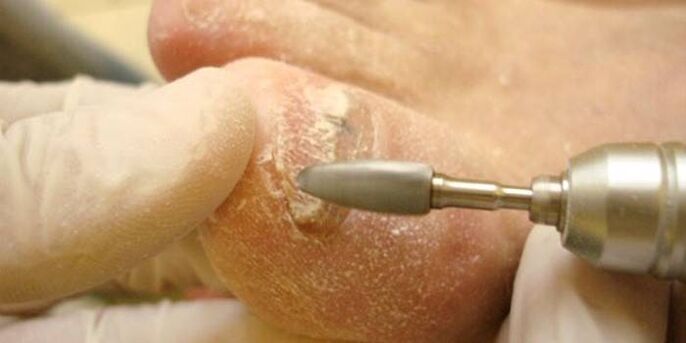
- The most unpleasant and painful is surgical removal of the nail, after which dressings are required for 7-10 days.To limit the load on the legs, bed rest and home rest for rehabilitation are recommended.The healing process of the nail is long, accompanied by discomfort.
- Hardware removal of the nail plate is carried out with a device with abrasive attachments reminiscent of dental drills.After applying a special softening composition, the specialist gradually removes the layers of the infected nail.For complete removal you need to do at least 3-4 sessions.After the procedure, all instruments and objects that came into contact with the patient must be disinfected and sterilized.
- A good alternative to the listed methods is a cosmetic product that painlessly and in a short time (several procedures) removes a nail infected with mycosis.Tea tree oil, which is included in the composition, has a disinfectant, antifungal effect, and helps quickly grow a new healthy nail.The medicine is applied directly to the nail after steaming in a soap-soda solution, covered with a band-aid for several days.More details about use are indicated in the instructions for the drug.
Local remedies: creams, sprays and ointments
At the initial stage of the disease, it is better to use topical preparations in the form of creams, gels, and ointments.Apply to a clean, dry surface of the area of the finger and nail affected by mycosis.An antifungal liquid containing boric acid and resorcinol helps dry and disinfect affected areas.
An antiseptic created on the basis of iodine accelerates the process of renewal and healing of the nail itself and the area around it.After applying the spray, manifestations of an allergic reaction in the form of burning and itching are possible.To ensure that anti-fungal creams or gels are better absorbed into the nail, the surface should be lightly treated with a nail file.To enhance the therapeutic effect, you can add propolis, which has a strong anti-inflammatory effect, to creams and ointments.
Folk remedies
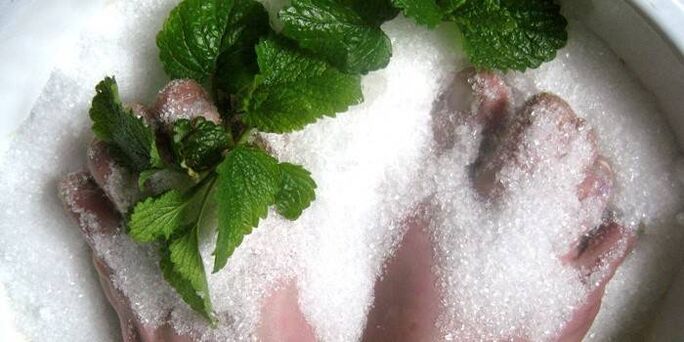
Some people find it easier to use less expensive folk remedies to treat nail fungus.But we must remember that in advanced cases, there is no way to do without complex therapy that will completely kill the fungal spores, otherwise the newly grown nail will become infected and the disease will return.Treatment according to the scheme of home procedures will have a beneficial effect only if only the first signs of infection with mycosis appear.
Vinegar

Vinegar is acidic, which has a detrimental effect on fungal bacteria.You should not overuse this treatment as it can cause burns around the nail.
- The easiest way is to lubricate the nail plate and skin of the feet with a cotton swab dipped in 9% vinegar.After which you should put cotton socks on your feet.The procedure is done at night.
- Baths.Before going to bed, pour 200-250 ml of table vinegar into a bowl of hot water and steam your feet for 10-15 minutes.Moisture from the nail after the procedure is removed with a disposable towel or napkin and medications recommended by the doctor are applied.It is better to do such baths every other day.
- Lotions.Soak a cotton or gauze swab in vinegar or a mixture with vegetable oil, prepared in equal proportions.Use an adhesive plaster to attach to the nail at night.The treatment process is long until a new healthy nail grows, but the fungus is destroyed.
Iodine
An alcohol solution of iodine can be found in every home medicine cabinet, which is why this remedy is so popular for the treatment of mycosis of the feet.Iodine is a strong antiseptic that has cauterizing properties and can cause protein to coagulate.The fungus has a protein structure, so the use of iodine can show a quick positive effect in treatment, but only if the disease is not advanced and the nail plate is no more than a quarter affected.
The use of iodine may cause the nail to turn yellow, which will disappear over time.Lubricate the skin of the finger and foot with iodine with caution, in moderate quantities, so as not to cause a burn.You need to lubricate the nail plate regularly, daily, until complete recovery.For the purpose of prevention, iodine is applied to healthy nails once a day, twice a day to affected areas.Remember that healthy and fungal nails are treated with different swabs to avoid the spread of mycosis.
Celandine

Many generations of people have already known about the medicinal properties of celandine.Herbalists have a positive attitude towards the use of this medicinal plant, but remind us that in everything you need to know when to stop.Freshly picked celandine from the stem secretes a bright yellow juice, which should be used immediately for treatment and lubricate the infected area of the leg and nail.Large amounts of juice may cause burns.
To prepare celandine tincture, its fleshy stems and leaves must be passed through a meat grinder and squeezed out using gauze folded in several layers.Dilute the resulting amount of juice in a 1:1 ratio with 70% alcohol and leave for about a day.Treat the affected areas of the skin and nails with an alcohol solution of celandine, after steaming the feet in a hot soap-salt bath.For effective treatment, the use of tincture is alternated with baths based on celandine decoction.Add 1 liter of strong brewed herbal infusion to hot water.Soar your feet for 15-20 minutes.
Kombucha
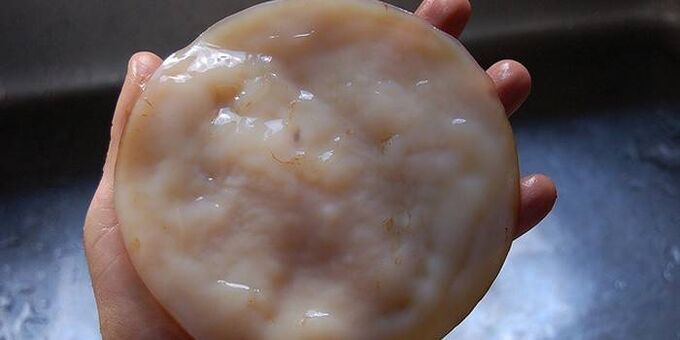
Kombucha is used not only to prepare a tonic drink, but also for medicinal purposes.Used for rubbing into infected skin and nails or as compresses.
- Peel a piece of kombucha, grind it into a paste and rub it into the infected area 2-3 times a day.
- The compress is applied at night.The washed and cleaned layer of kombucha is applied to the infected nail, wrapped in polyethylene and put on a thick sock.Pain may occur during treatment.In the morning, rinse your foot with warm water and remove the top layer of the nail, which will gradually peel off.After removing dead particles, the nail is lubricated with iodine or brilliant green.Treatment procedures are repeated over a course of 5-7 days.After a while, to prevent and consolidate the results after treatment, repeat the procedure 1-2 times.
Recipes for bath solutions
Many home remedies against fungal diseases are used not only for lubrication, but also as a bath for steaming the feet.To do this, add one or another component to hot water and keep your feet in it for 10-20 minutes, after which the nail is treated with ointment, gel or antifungal cream.
- Hot foot baths with the addition of an alcohol solution of iodine have a good antibacterial effect against fungus.
- Using soap and soda baths every other day will give a noticeable positive result in the fight against fungus.Using tar soap will enhance the effect.
- Alternatively, it is possible to use baths with sea salt (2 tablespoons per 1 liter of water).Treatment procedures should not be stopped for 20-25 days.
- Baths with a decoction of celandine can be used daily, both for therapeutic and preventive purposes against foot and nail fungus.
- A decoction based on potato peels, which is added to hot water, will help gradually get rid of the fungus if the procedure is repeated every day.
Which doctor treats toenail fungus
Mycosis (fungus) is the most common disease among the population that affects the skin and mucous membranes of humans, but the most common cases are infections of the feet and nails.If you have signs of fungal infection, you should contact a specialist in this field - a mycologist, who can determine the type of fungal disease and prescribe treatment.Self-treatment often ends in complications, mycosis is dangerous with relapses, it is better to fight it with medication.
If there is no such specialist in the nearest clinic, you should contact a dermatologist.This is a medical professional who treats diseases of the skin, including nails.You can get quick and good treatment results if you promptly contact the clinic at the first onset of symptoms of fungal disease.Strictly following all the specialist’s recommendations will help you defeat the disease and restore your health in a short time.
Photo: what nails affected by fungus look like
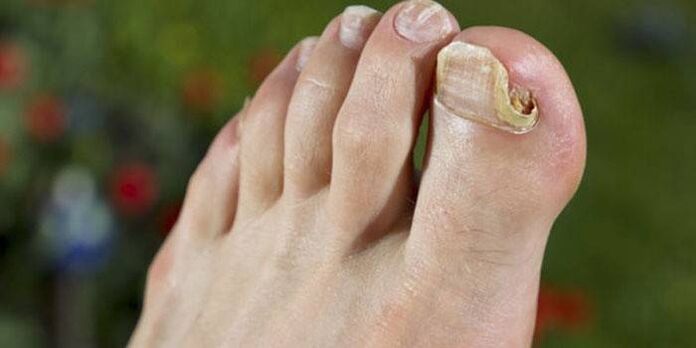
No matter how unattractive the photos of nails affected by fungus may look, it’s worth looking at them to avoid a repeat of the unpleasant fate.Pain, suffering, external discomfort, complexes - you can get all of this if you do not follow basic rules of personal hygiene, and if you do not contact a specialist at the first sign of a fungal infection.It should be remembered that treatment is not considered complete unless you treat all the shoes you use, as re-infection may occur.
Reviews
- Woman, 49 years old: “After the beach season, my husband began to notice that unpleasant things were happening to his feet - itching, redness on the fingers. He didn’t pay attention, but in vain. After a couple of months, the condition worsened, the nails began to thicken and hurt. It turned out that it was a fungus, which is very difficult to remove. Treatment - lotions with peroxide - did not give much result. This would have helped the treatment at the very beginning. Now he has finished taking a course of antifungal drugsantibiotics prescribed by the doctor. His condition has improved, we are waiting for new nails to grow, because those affected by the fungus had to be removed."
- Guy, 17 years old: “My brother and I recently vacationed with our grandmother in the village. We walked around a lot without shoes, so my brother “caught” a fungus on his feet somewhere. It’s good that our granny is attentive, she immediately diagnosed and burned the first spots that appeared with fresh celandine. The treatment turned out to be effective, a few drops of juice was enough. A few days later, my brother already forgot that somewhere it hurt and was burning. Noticing in time- means to cure quickly."
- Woman, 42 years old: “I thought that such a disease as a fungus was a thing of the past, but my son returned from the army, and it’s impossible to look at his nails without tears. For so much time there was no opportunity for treatment. A neighbor advised applying a compress with garlic pulp to the damaged nails. The son complains that he is baking, but tolerates it. The inflammation is gradually going away. We really hope that we can do the treatment without taking antibiotics.”